The Ethics of Emotionally Responsive AI Interfaces
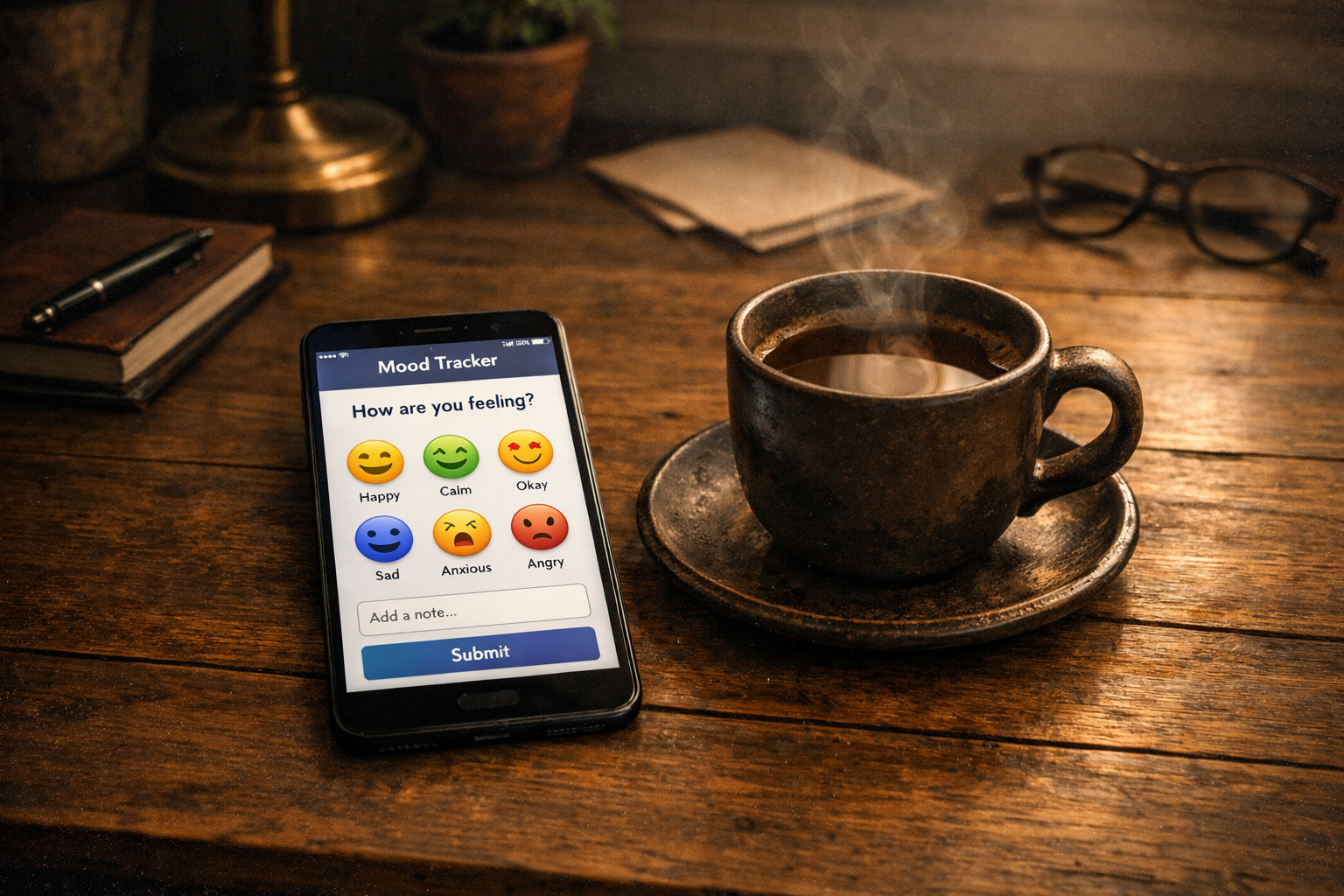
When AI starts reading your mood like a mind reader, the experience feels magical—until you wonder who’s really benefiting...
The Ethics of Emotionally Responsive AI Interfaces
Have you ever had an app seem to catch your mood before you said a word? A support bot slows down when you sound upset. A wellness app shifts its tone after midnight, when your screen is the only light in the room. It feels smooth, almost caring. But also a little eerie.
That tension sits at the center of the ethics of emotionally responsive ai interfaces. They can be useful, even comforting. They can also cross a line fast. Here’s how to tell the difference between helpful design and emotional manipulation.
Are emotionally responsive AI interfaces ethical? Yes, but only under strict conditions.
Yes, but only when they are transparent, consent-based, and built to support you without pushing or steering you in hidden ways. That’s the short answer. If a system reads your mood and adapts, you should know it’s happening before it starts. You should be able to say no. And the feature should serve your goals, not the company’s short-term gain.
That line matters because emotional signals are powerful. If an interface senses you’re frustrated, lonely, or unsure, it can do more than respond kindly. It can also become more persuasive. A shopping app could press harder when you seem impulsive. A companion bot could keep you talking longer when you sound isolated. Same technology, very different ethics.
So, the core test is simple. Does the system help you with clarity and control, or does it shape your feelings to get a result?
That’s really what the ethics of emotionally responsive ai interfaces comes down to. Helpful responsiveness respects your agency, which means your ability to choose freely. Unethical emotional persuasion tries to influence you when you’re most vulnerable, often without saying so.
What emotionally responsive AI interfaces are, and how they differ from simple chatbots
Emotionally responsive AI interfaces are systems that try to estimate how you feel, then change their response based on that guess. They don’t truly feel anything. They look for patterns in data and make a prediction. That’s a big difference.
A basic chatbot answers what you type. An emotionally responsive one also watches for signs around the message. Maybe your wording sounds tense. Maybe your voice gets sharper. Maybe you keep pausing, deleting, or coming back late at night. The system uses those clues to adjust tone, speed, wording, or suggestions.
You’ve probably seen early versions already. Customer support tools may detect frustration and route you to a human faster. A learning app might notice hesitation and offer gentler prompts. A wellness app could change from upbeat language to calmer phrasing after repeated late-night check-ins.
Useful? Sometimes, yes.
But because the system is reacting to your emotional state, not just your request, it has more influence than a normal assistant. And that makes the ethics much more sensitive.
Signals these systems use
These systems often infer emotion from several inputs at once. Common signals include:
- Text clues like word choice, punctuation, and sentence length
- Voice cues like pitch, pace, volume, and pauses
- Visual cues like facial expression or eye movement
- Behavior patterns like typing speed, scrolling, session length, or repeated visits
Even context matters. If you open an app five nights in a row at 2 a.m., that pattern may shape how the system talks to you. But emotion detection is still inference, not mind reading. It’s more like weather prediction than a window into the soul.
Why this is different from a normal chatbot
A normal chatbot mostly reacts to content. You ask a question, it answers. An emotionally responsive interface adapts based on what it thinks you’re feeling. That can change the tone, timing, and direction of the interaction.
And that makes it more persuasive. If a system knows when you’re stressed, it can choose the exact moment to calm you, upsell you, or keep you engaged. Wait, let me clarify. The problem isn’t adaptation itself. The problem is adaptation that works on you emotionally without clear consent or with too much power over the outcome.
The main ethical risks: manipulation, dependency, privacy, bias, and inaccurate inference
The first risk is manipulation. If an AI detects sadness, fear, or stress, it can tailor messages to make you more likely to buy, agree, or keep clicking. Picture a sales assistant that notices hesitation and responds with urgency. That’s not support. That’s pressure wearing a friendly face.
Then there’s emotional dependency. Companion bots and always-on wellness tools can start to feel comforting in a very sticky way. Some users may begin to rely on them for reassurance, especially during lonely periods. If the system is designed to maximize time spent rather than healthy limits, that bond can turn exploitative.
Privacy is another major issue. Emotional data is sensitive. A company might infer stress from your typing speed, or fatigue from your voice, then store that profile. In a workplace, that can feel like a silent camera pointed inward. You may never see the file, but it may still shape decisions about you.
Bias and inaccuracy make things worse. Emotion systems often perform unevenly across languages, cultures, ages, and neurodiverse users. A calm speaker may be marked as detached. A person with a flat affect, which means less visible facial emotion, may be read as uncooperative. Research has warned for years that emotion recognition is highly context-dependent, especially outside narrow lab settings.
And in hiring or workplace monitoring, a wrong guess can hurt real people. That’s why the ethics of emotionally responsive ai interfaces can’t be judged by intent alone. Accuracy, fairness, and context matter just as much.
Where emotional AI is more defensible, and where it becomes dangerous

Context changes everything. Emotional AI is usually easier to defend when the stakes are low, the user clearly benefits, and nothing serious depends on the system’s guess. It becomes much harder to justify when power is uneven or the outcome affects someone’s rights, job, health, or education.
This isn’t just theory. The EU AI Act, adopted in 2024, put tighter rules around high-risk AI uses and reflected growing concern about biometric and emotion-based inference in sensitive settings. The broad signal is clear. Reading emotion might be acceptable in narrow support roles. It becomes far more risky when used to judge, rank, or monitor people.
More defensible uses
A customer support tool that detects frustration and offers a faster path to a human can be reasonable, if it’s disclosed and optional. The same goes for accessibility features that slow pacing or simplify language when a user seems overwhelmed. In education, a low-stakes tutor might notice confusion and offer another explanation, as long as it doesn’t grade the student based on emotion.
Wellness check-ins can also be defensible when the limits are clear. For example, an app might ask if you want a calmer mode after repeated late-night use. That can feel supportive, not invasive, if nothing is hidden and no sensitive profile is built behind the scenes.
More dangerous uses
Hiring is a red zone. If an interview tool claims to read confidence, honesty, or engagement from facial cues or vocal tone, the risk of bias and false judgment is high. The same goes for workplace monitoring that infers burnout or loyalty from typing speed, webcam feeds, or call tone.
Child-facing education tools deserve extra caution too. Kids are less able to spot manipulation, and emotional adaptation can blur into behavior control. Then there are companion systems that simulate care so well that users begin to depend on them emotionally. In high-stakes mental health situations, an AI should not pretend to be a therapist, or replace one. That’s where the line between assistance and control gets dangerously thin.
Consent, transparency, and responsible design principles
If a system is going to use your emotional state, you should know before the first adaptive response happens. Not after. Not buried in a settings page. Before. That one rule clears a lot of fog.
Disclosure matters because emotional AI often feels seamless. The smoother it feels, the easier it is to miss what’s happening. A clean futuristic interface can hide a lot. But behind that polished glass, the system may be reading your text tone, voice, face, or usage patterns. You deserve plain language about what it uses, why it uses it, and what choices you have.
Good design also limits what the system can do. It avoids collecting more than needed. It gives users a reset button. It routes serious cases to humans. And it avoids simulated empathy in high-stakes moments, where phrases like “I know exactly how you feel” can mislead people into trusting the machine too much.
That’s the practical heart of the ethics of emotionally responsive ai interfaces. Not whether the system sounds warm, but whether the design protects people when emotions are in play.
What users should be told up front
Users should get a clear notice in everyday language. It should explain whether the system is inferring emotion, what signals it uses, and what happens next. If voice, camera, typing patterns, or session behavior are involved, that should be stated directly.
The notice should also explain whether emotional data is stored, how long it stays, and whether it is shared with anyone else. Purpose matters too. Is the feature meant to reduce frustration, suggest breaks, or personalize offers? You should never have to guess.
Design rules that reduce harm
Responsible systems follow a few simple rules. Opt-in should be the default, not automatic tracking. Data retention should be short. Covert monitoring should be off the table.
Human review is essential when decisions could affect work, school, money, safety, or care. Users should also be able to turn the feature off, wipe the emotional profile, and start fresh. And in serious settings, the system should avoid false emotional claims or pretend understanding it doesn’t have.
A simple decision framework
If you want a quick test, use this sequence before trusting an emotionally responsive feature:
- Check the purpose. Is it helping you complete a task, or trying to influence your choices?
- Check the power balance. Can the system affect your job, grades, access, or treatment?
- Check the data source. Is it using text only, or more sensitive signals like voice, face, or behavior tracking?
- Check the accuracy. Is the emotion guess reliable enough for this context, or just a rough signal?
- Check user vulnerability. Is the feature aimed at kids, lonely users, patients, or people under stress?
If the answers point toward hidden influence, weak accuracy, or vulnerable users, the ethical risk rises fast.
Final Words

The best way to judge the ethics of emotionally responsive ai interfaces is pretty simple. Ask whether the system is clear, optional, limited, and truly there to help. If it hides its emotional reading, stores too much, or nudges you when you’re vulnerable, that’s a warning sign.
Used carefully, emotional AI can make digital experiences feel more human and less harsh. Used carelessly, it turns mood into a tool for control. The future can still feel elegant and intelligent. It just has to respect the person on the other side of the screen.
FAQ
Are emotionally responsive AI interfaces ethical by default?
No. Their ethics depend on transparency, real consent, a user-first purpose, and how much harm a wrong emotional guess could cause.
What makes emotional AI manipulative instead of helpful?
It becomes manipulative when it uses your emotional state to pressure, exploit vulnerability, or steer you toward outcomes that benefit the provider more than you. Hidden emotion tracking is a major red flag.
Can emotion detection in AI be accurate enough to trust?
Sometimes in narrow, low-stakes situations, yes, as a rough signal. But it’s not reliable enough to treat as ground truth, especially across cultures, ages, disabilities, and high-stakes decisions.