What a Fully Connected Smart Apartment Feels Like

Step inside a home that greets you, adapts instantly, and anticipates your next move—until one surprising detail changes everything...
Have you ever walked into a place that seemed to know you were home before you touched a switch? The hall light eases on. The air feels right. Music picks up where it left off. It sounds like sci-fi, but parts of it already exist.
That’s the real appeal behind what a fully connected smart apartment could look like. Not more gadgets on more shelves, but a home that behaves like one system. Here’s what that actually means, how it works room by room, and where the dream still runs into real-world limits.
A Home That Acts Like One System
At its simplest, what a fully connected smart apartment could look like is an apartment where the main systems work together instead of acting like separate islands. Lighting, climate, entry, security, appliances, entertainment, and energy tracking all respond through shared rules, sensors, and controls. So when one thing happens, other parts of the apartment can react too.
That’s the big difference from a home with a few smart devices. A smart speaker in the kitchen and a video doorbell by the front door can be useful, sure. But they don’t automatically create a connected living space. A fully connected apartment is more coordinated than that. It notices context, like whether someone is home, what time it is, or whether a room is occupied, then adjusts itself.
Picture it in plain terms. You arrive home at 6:15 p.m. The door recognizes your phone or code. The entry light turns on at 40 percent because it’s evening. The thermostat shifts from away mode to comfort mode. If it’s dark outside, the living room lights come up slowly. If you’ve set a quiet scene for weekdays, the TV stays off and calm music starts instead.
So the apartment feels less like a pile of products and more like a living environment with memory.
What Makes It More Than Smart Devices
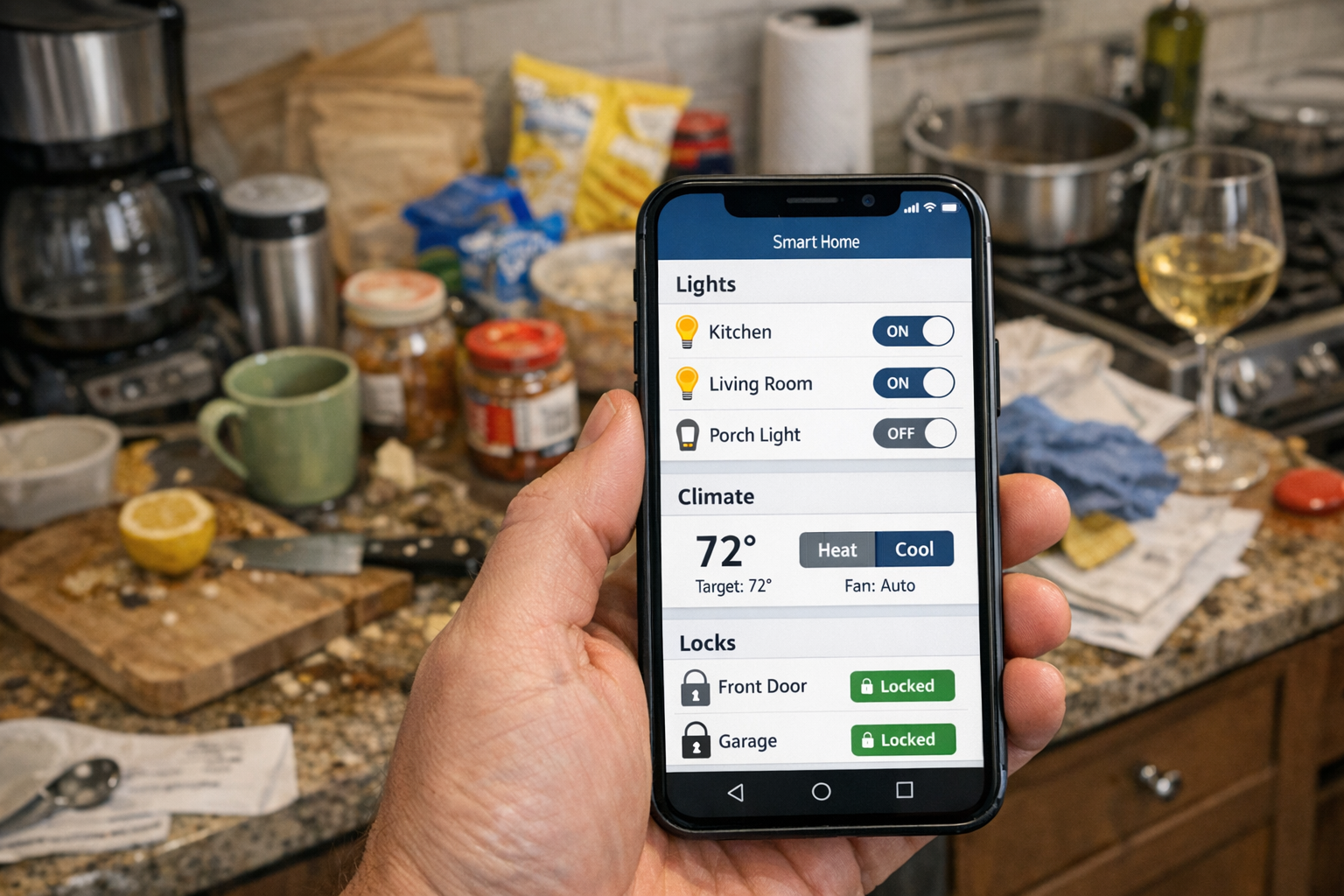
A connected apartment becomes something bigger when devices share information and respond through one control layer. That control layer could be a mobile app, a voice assistant, a hub, or a mix of all three. The point is coordination. One sensor reading or one action can trigger a chain of useful changes across the apartment.
This got more practical in 2022, when Matter launched. Matter is a smart home standard, which means a shared set of rules that helps products from different brands work together more easily. It hasn’t fixed everything, no. But it has made cross-brand setups less messy than they used to be. And that matters because most people don’t buy every device from one company.
Voice assistants still play a big role. So do phone apps. You might say goodnight and have the apartment dim lights, lower the shades, lock the door, and reduce the temperature by two degrees. Or you tap one button in an app and switch the whole place into away mode.
The real shift is shared data. A motion sensor in the hallway can help with lighting, security, and energy savings at the same time. A door sensor can tell the climate system not to cool the apartment while a balcony door is left open. Small signals. Bigger response.
Core Systems That Shape the Apartment From the Inside Out
The systems that define what a fully connected smart apartment could look like are the ones you feel every day, even when you stop noticing them. Lighting is usually the most visible. It can change by time of day, brightness outside, or whether someone is in the room. In the morning, lights can come on cool and bright. At night, they can shift warmer and dimmer to feel calmer on the eyes.
Climate control does similar work in the background. A smart thermostat can follow schedules, use occupancy data, and react to temperature changes room by room if sensors are placed well. That means less wasted heating or cooling, and more comfort where you actually are.
Security and access cover locks, cameras, door sensors, leak sensors, smoke alerts, and occupancy checks. A smart lock can log who entered and when. A leak sensor under a sink can send an alert before a small drip becomes a ruined floor. That kind of thing feels futuristic, but also deeply practical.
Then there are appliances and entertainment. A connected oven can send a timer alert to your phone. A washer can tell you a cycle is done. Speakers and TVs can join scenes, so a movie mode dims lights and closes shades in one step. Energy monitoring ties it together by showing what uses power, when it spikes, and how routines affect cost over time. The apartment starts to reveal its own patterns.
A Room-by-Room Smart Apartment Experience
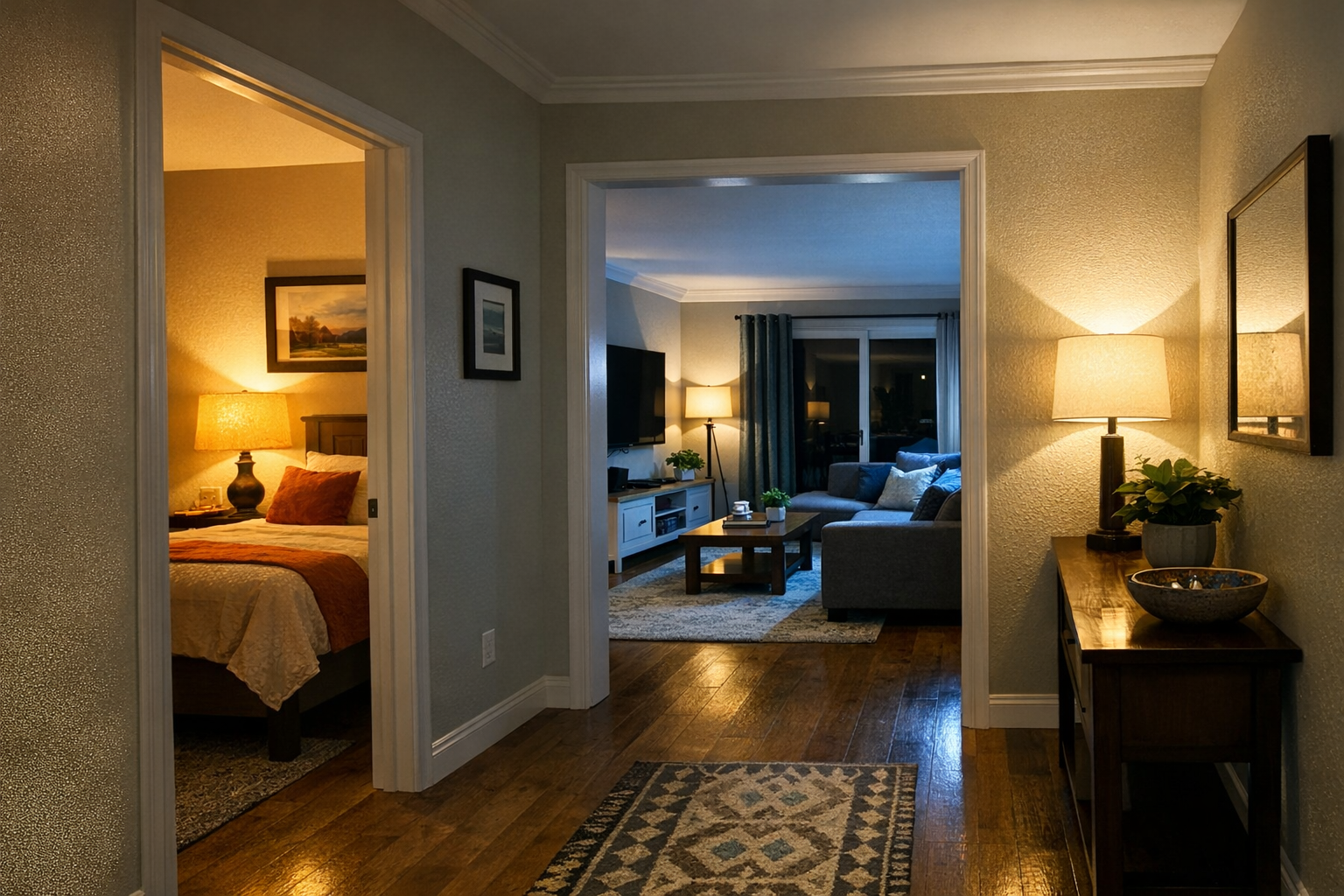
The easiest way to picture what a fully connected smart apartment could look like is to walk through it. Not as a showroom. As a place where ordinary routines happen with less friction.
Entryway
- You approach the door and it reads a phone, key fob, or code.
- The lock opens, the entry light turns on, and the security system shifts from away to home.
- If nobody enters within a set time, the door relocks and sends a check alert.
The entryway is where connection feels immediate. You don’t fumble for keys in the dark. And when you leave, one action can do the reverse. Lock the door, turn off selected lights, pause music, and lower heating or cooling.
Living Area
- Presence sensing can tell whether the room is active or empty.
- Lights adjust for reading, watching a film, or daytime brightness.
- Speakers, shades, and temperature settings can change together in a scene.
This is usually the apartment’s central mood engine. Have you ever noticed how much a room changes when light and sound shift at the same time? A connected setup uses that. If everyone leaves the room for 20 minutes, media can pause and lights can drop. If sunset hits, shades close partway to reduce glare.
Kitchen
- The oven, microwave, plugs, and timers can send alerts to your phone or speaker.
- Under-sink leak sensors can trigger notifications fast.
- Energy dashboards can show which appliances draw the most power.
The kitchen gets practical benefits more than dramatic ones. Hands-free timers. A coffee routine at the same time each morning. Ventilation that starts when heat or air quality rises. And if the apartment is in away mode, certain appliances or smart plugs can power down automatically.
Bedroom and Bathroom
- A wake-up routine can begin with motion at 7:00 a.m. or with a set alarm time.
- Bedroom lights brighten slowly while blinds open and the temperature shifts.
- In the bathroom, moisture sensors can start ventilation when humidity rises after a shower.
This is where smart living feels quietest. Better, really. Instead of a loud alarm and full brightness, the room can move in stages. At night, a low path light can guide you to the bathroom without blasting the whole room awake. And when steam builds up, the fan starts on its own and turns off later.
How Automation, Routines, and Sensors Change Daily Life
Automation is the part that makes a connected apartment feel alive. Not alive in a creepy way. More like responsive. You set rules once, and the apartment follows them in the background. That could happen through an app, a hub, or a voice platform that links devices together.
Sensors are the quiet input layer. Motion sensors detect movement. Occupancy sensing tries to tell whether a person is still in a space. Temperature sensors read hot and cold spots. Contact sensors notice doors and windows opening. Each one adds a small piece of context, and routines turn that context into action.
Here’s a clear example. If no one is home for 30 minutes, the apartment can lower cooling, turn off selected lights, pause nonessential devices, and arm certain alerts. If a bedroom motion sensor detects movement at 7:00 a.m. on weekdays, a wake-up scene can begin. Lights rise over 10 minutes, the thermostat nudges warmer, and a speaker reads the weather.
App-based control keeps all this understandable. You can still tap a button and override things. That part matters. A smart apartment shouldn’t feel like it has its own agenda. It should feel more like a very organized assistant that knows your habits and stays out of the way until needed.
What Works Well Today, and What Still Falls Short
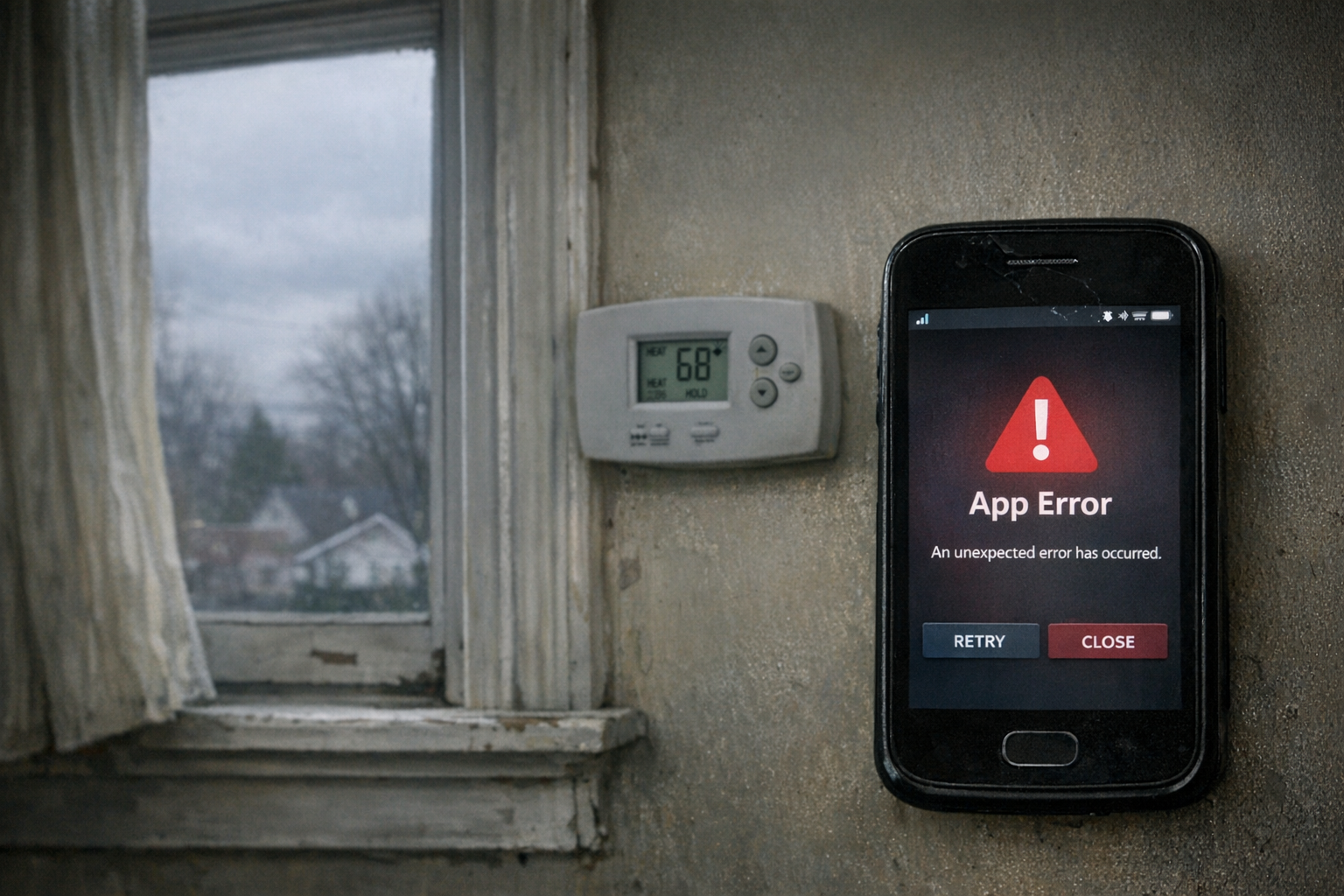
A fully connected apartment is possible today, but it comes with tradeoffs. Some are easy to live with. Some are annoying in ways only real use reveals. So this part works best as a quick table.
| Area | What works well today | Where it still falls short |
|---|---|---|
| Privacy | You can choose local control on many devices, which means data stays in the home network instead of always going to a cloud server. | Cameras, voice assistants, and cloud apps can still collect sensitive data, and privacy settings are often buried. |
| Reliability | Basic automations like motion lights, thermostat schedules, and door alerts are usually solid when set up well. | Cloud features can fail if the internet goes down, and even local systems can break if batteries die or Wi-Fi gets crowded. |
| Compatibility | Matter, launched in 2022, has improved cross-brand support for many common device types. | Not every product supports Matter, and advanced features still vary by brand and platform. |
| Installation | Retrofits are easier than ever with battery sensors, smart bulbs, and plug-in devices. | Retrofit setups can feel patchy, while purpose-built apartments can hide wiring and embed sensors far more cleanly. |
If the internet drops, many smart devices still keep local basics running. Lights on local switches may work. Some automations on a hub may keep going. But remote access, cloud backups, voice processing, and certain app features can disappear until the connection returns.
And there’s a design gap too. Retrofitting often means visible sensors, extra chargers, and occasional lag. Building smart from the start creates a cleaner result. Fewer compromises. More seamless control.
What a Future-Ready Smart Apartment Could Include Next
Over the next 2 to 5 years, what a fully connected smart apartment could look like will probably become less flashy and more seamless. That’s the real direction. Fewer obvious commands. More quiet adjustment in the background.
Voice control will keep improving, but it may become less central than people once expected. Occupancy sensing is more likely to define the next step. Instead of asking a room to respond, the room will infer what’s needed based on presence, time, and pattern. Lights will adapt not just to sunset, but to what you’re likely doing. Reading, cooking, winding down.
Adaptive lighting will get better at matching the body’s daily rhythm. Energy-aware automation will also grow, especially as electricity prices change by time of day in more places. An apartment might pre-cool slightly before peak rates, delay a washer cycle until a cheaper period, or slow charging for devices when demand is high.
Predictive climate control is coming into view too. Well, actually, parts of it are already here in premium systems. The next version will be smoother and more apartment-friendly. Better interoperability should also make connected living feel less like a puzzle. The future probably won’t look like more gadgets. It’ll look like fewer visible controls, cleaner spaces, and systems that simply fit together.
Final Words

Picture the moment again. You step inside. The light is right, the air feels steady, and the apartment shifts around your routine without making a show of it. That’s the clearest answer to what a fully connected smart apartment could look like.
It’s not a museum of devices. It’s a home where systems share context, respond together, and still leave you in control. And as standards improve and design gets cleaner, the next wave of smart apartments should feel less mechanical and more natural. Closer, finally, to the future people imagined.
FAQ
What makes a smart apartment fully connected?
It becomes fully connected when devices don’t just work alone, but share data and respond together through a central app, hub, or automation platform. That coordination is what turns separate products into one living system.
Can a smart apartment still work if the internet goes down?
Yes, some parts can. Many devices support local control, so lights, schedules, and certain automations may still run, but cloud-based features, remote access, and some voice functions can stop working.
What is the difference between a smart apartment and a connected apartment?
A smart apartment may simply have a few smart devices, like a speaker or thermostat. A connected apartment links those systems so they communicate and automate as one environment.